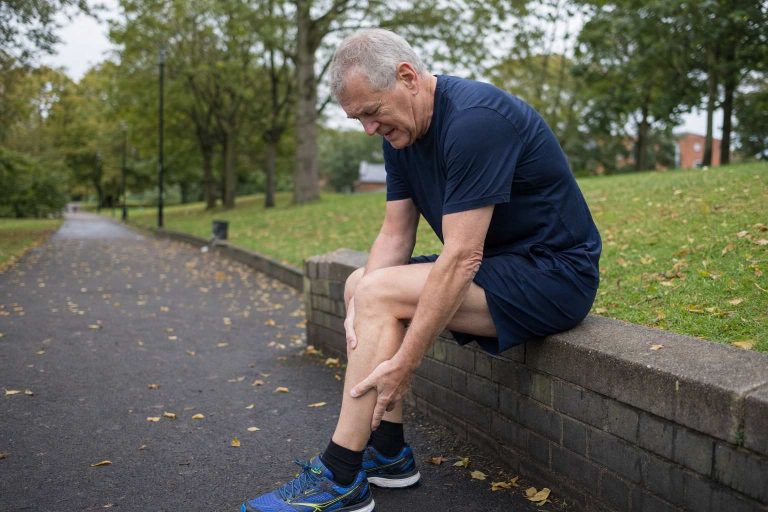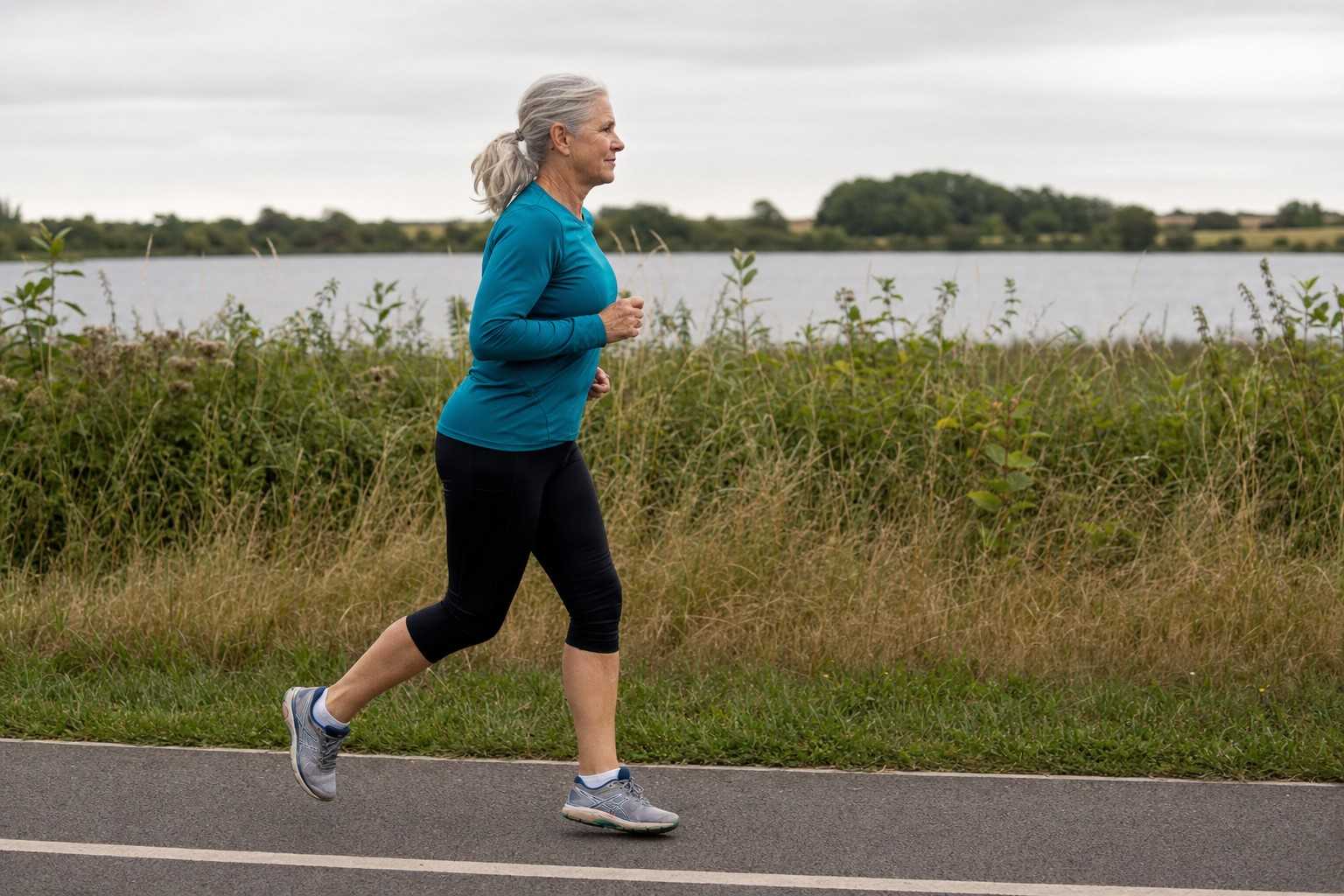
“You will ruin your knees.” It is the warning almost every older runner has heard, usually from someone who does not run.
It sounds obvious. Knees are hinges, running pounds them, and pounding wears things out. The trouble is that the evidence does not agree.
When researchers actually measure it, recreational running is not the knee-wrecker it is assumed to be. For most people it looks closer to the opposite.
What the research actually found
The most useful work here is a 2017 systematic review and meta-analysis in the Journal of Orthopaedic and Sports Physical Therapy. It pooled data on more than 100,000 people and sorted them into three groups: sedentary non-runners, recreational runners, and competitive or elite runners.
The result surprised a lot of people.
Recreational runners had the lowest rate of hip and knee arthritis of the three groups, at roughly 3.5%. Sedentary people sat at about 10%, and competitive runners, the ones logging very high mileage for years, came in highest at around 13%.
The people most likely to have worn-out knees were not the runners. They were the ones sitting still.
In plain terms, moderate recreational running was linked to better joint health than not running at all. A history of recreational running did not raise the risk of developing knee arthritis, and it did not speed up arthritis in people who already had it.
Why “wear and tear” is the wrong picture
The myth rests on a faulty model: the idea that a joint is like a car tyre that wears down with every mile.
Cartilage is living tissue, not rubber. Like muscle and bone, it responds to load by adapting. Regular, moderate loading helps keep cartilage healthy, because the squeeze and release of each stride moves fluid and nutrients through it.
Take the load away entirely and cartilage does not last longer. It tends to thin.
That is why a sedentary life is itself a risk factor, and why the runners in the research came out ahead. Your knees are built to move.
What genuinely raises your risk
If recreational running is not the villain, what is? The real risk factors for knee osteoarthritis are reasonably well understood:
- A previous joint injury, especially a serious one such as a torn cruciate ligament or meniscus. This is one of the strongest predictors.
- Carrying excess weight, which adds load to the joint with every step and also drives inflammation.
- Family history and genetics, which you cannot change but which set your baseline risk.
- Very high-volume or competitive running sustained over many years, the pattern seen in that highest-risk elite group.
Notice what is not on that list: a few sensible runs a week in your fifties or sixties.
The over-50 picture, honestly
Two things are true at once, and an honest article has to hold both.
For healthy knees, taking up or keeping up recreational running later in life is well supported by the evidence. Age by itself is not a reason to stop, and the familiar “rest your knees to protect them” advice is, for most people, exactly backwards.
The picture is less settled if you already have osteoarthritis or a history of significant knee injury. Here the research is genuinely thinner, and the scientists themselves have called for more study of running in people who already have the condition. This is general information, not medical advice. If you have diagnosed arthritis, ongoing knee pain, or a past knee operation, ask your GP or a physiotherapist how to run, rather than whether to give up.
How to run knee-smart after 50
The goal is not to spare your knees from loading. It is to load them sensibly, so they adapt rather than complain.
- Build up gradually. Sudden jumps in distance are what tissue dislikes, at any age. The adjustments in the guide on preventing running injuries as you age apply directly to the knees.
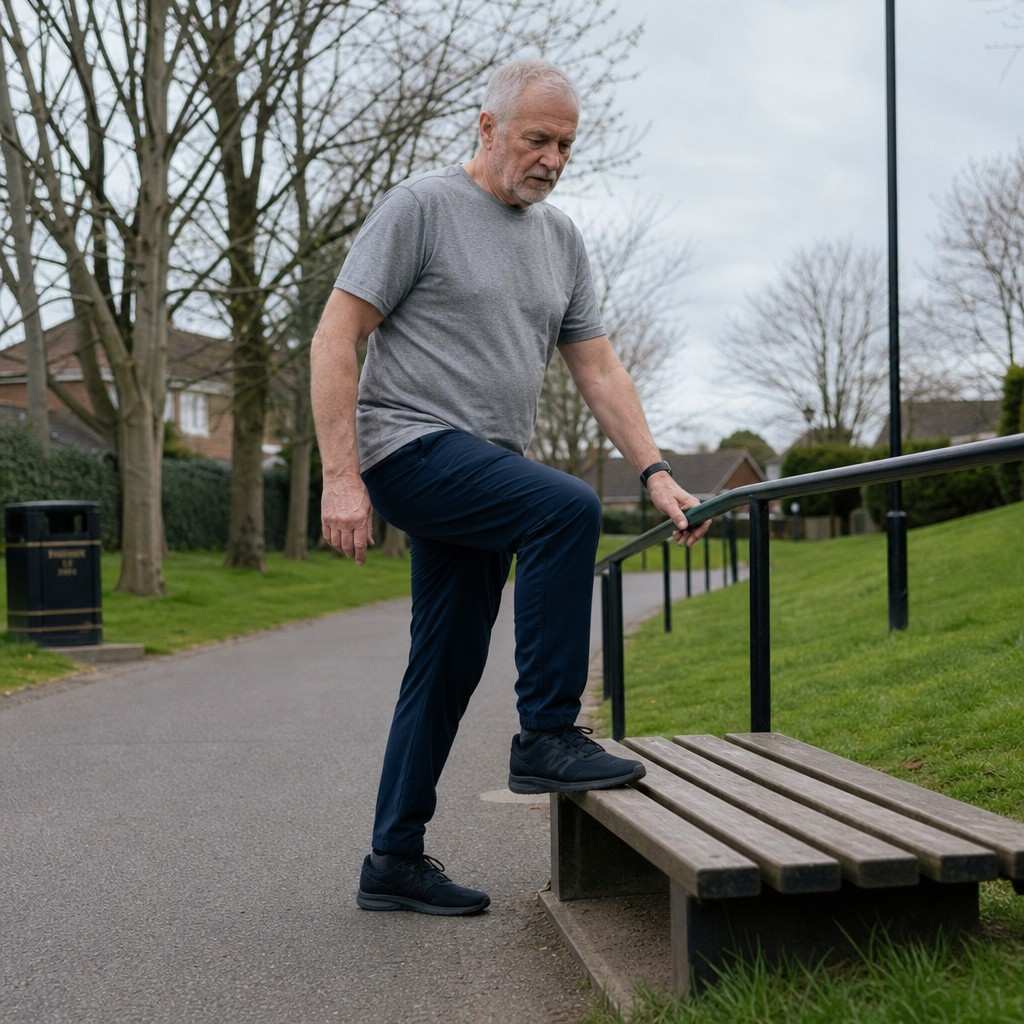
- Strengthen the muscles around the joint. Strong quadriceps, hamstrings and glutes share the load and protect the knee. Two short sessions a week is plenty.
- Watch your overall load. Recovery days, sensible mileage, and managing body weight all lower the stress on the joint.
- Treat pain as information, not a verdict. A niggle means adjust, not quit, and the piece on coping with running injuries after 50 covers how to tell the difference.
If you are only now thinking of starting, the step-by-step approach in how to start running in your 50s and 60s keeps those early weeks gentle on the joints.
The bottom line
The evidence has moved a long way from the playground wisdom that running ruins your knees. For healthy recreational runners, moving regularly looks protective, not destructive.
After 50, the bigger threat to your knees is not running. It is a chair.
Run sensibly, build slowly, keep the supporting muscles strong, and let the research, rather than the myth, decide what you do next.