Simple Balance Exercises for Active Seniors
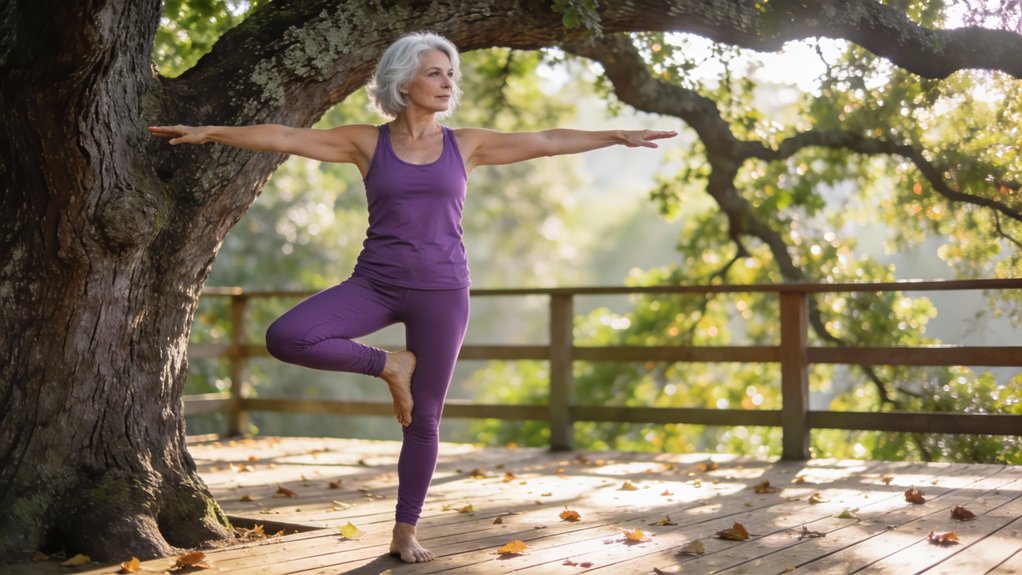
Your body’s balance system is like a use-it-or-lose-it muscle that quietly weakens without regular practice. You’ve probably noticed how much steadier you felt at 45 than you do now, that’s not just age, it’s inactivity.
The good news? You can rebuild your stability with five straightforward exercises that take less than 15 minutes and require nothing more than a sturdy chair.
Here’s what works, how often to do it, and why starting today matters more than you think.
5 Simple Balance Exercises Active Seniors Can Start Today
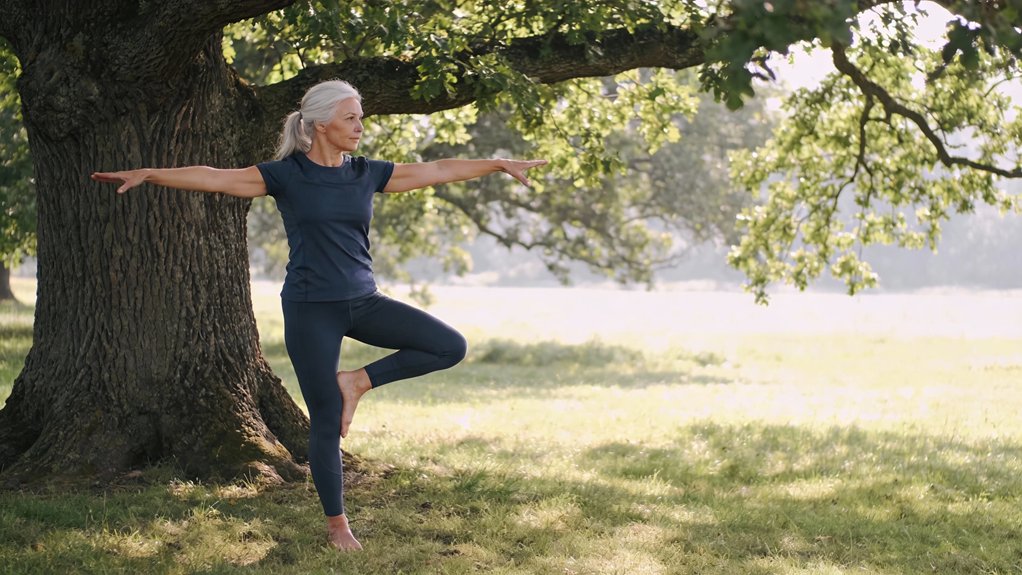
Starting balance exercises doesn’t require fancy equipment or a gym membership. You can begin with the one-leg stand: hold onto a chair for support, then lift one foot for 10 seconds.
The heel-to-toe walk mimics a tightrope, placing one foot directly in front of the other.
Weight shifts involve standing with feet hip-width apart, then transferring your weight side to side.
Side leg raises strengthen stabilizing muscles when you lift one leg outward while holding a counter.
These exercise variations deliver significant balance benefits, building greater confidence and independence. Regular practice of these movements can help reduce fall risk, which is a critical concern for maintaining long-term wellness and quality of life.
How to Modify and Progress Your Balance Exercises Safely
As you gain confidence with basic balance exercises, you’ll want to adapt them to match your improving abilities while protecting yourself from falls.
Safe progression means gradually reducing support, moving from holding a chair with both hands to one hand, then just fingertips.
Progress safely by transitioning from two-handed chair support to one hand, then fingertips only as your balance improves.
Track how long you maintain single-leg stands, aiming to add five seconds weekly.
Exercise modifications like closing your eyes during weight shifts or walking heel-to-toe along a hallway line increase challenge safely.
Always keep support within reach.
Consult your healthcare provider about personalised adjustments that match your current abilities.
The Right Training Schedule: How Often to Practice Balance Work?
Understanding when and how to modify your exercises naturally leads to questions about frequency.
You’ll want to practice balance work 2 to 3 times weekly for ideal results. Each session should run 20 to 30 minutes, giving you enough time to target different muscle groups effectively. This exercise frequency fits easily into most weekly routines without overwhelming your schedule.
If you prefer shorter sessions, daily 10-minute practices work too. The key is consistency.
As your stability improves, gradually increase difficulty to keep challenging yourself. Regular practice helps you stay steady and independent.
Why Balance Training Matters More as You Age
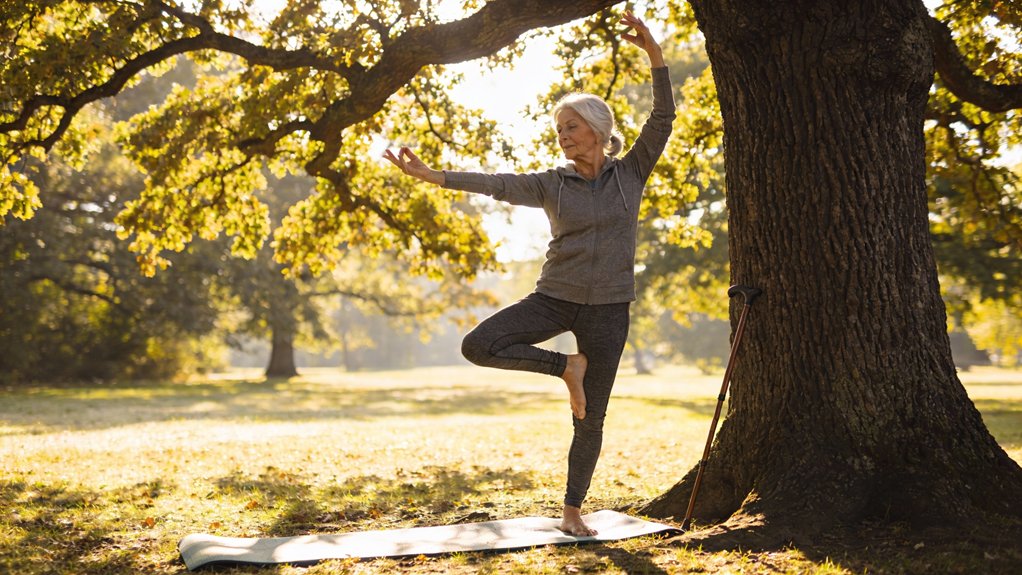
Your body undergoes significant changes after age 65 that directly affect your ability to stay upright.
Your vestibular system weakens, reducing the sensory feedback that keeps you balanced.
Muscle strength declines, making recovery from a stumble harder.
These changes explain why falls become the leading cause of fatal injuries in older adults.
Conditions like diabetes and high blood pressure compound these risks.
Regular balance training directly counteracts these effects, maintaining your stability and coordination.
You’ll preserve your independence longer.
Fall prevention isn’t optional, it’s essential for active ageing.
How Regular Balance Practice Builds Lasting Confidence and Independence
When you practice balance exercises three to four times weekly, your brain rewires itself to process spatial information more efficiently.
This neural adaptation directly translates to confidence building in everyday situations: reaching for items on high shelves, maneuvering uneven sidewalks, or moving through crowded spaces.
Within eight to twelve weeks of consistent practice, you’ll notice reduced hesitation in your movements.
This newfound stability helps you keep the active, independent lifestyle you value.
Studies confirm that seniors who commit to regular balance training report 40% less fear of falling.