Understanding Proper Running Form for Beginners

While sprinting looks completely different from jogging, both require the same foundational form to keep you injury-free. You’ve probably seen runners who seem to glide effortlessly while others look like they’re fighting their own body with each step.
The difference isn’t natural talent, it’s technique. Your hips, feet, and arms work together in a specific pattern that either protects your joints or gradually wears them down.
Here’s what separates smooth runners from those headed toward problems.
How to Position Your Hips and Core for Proper Running Form
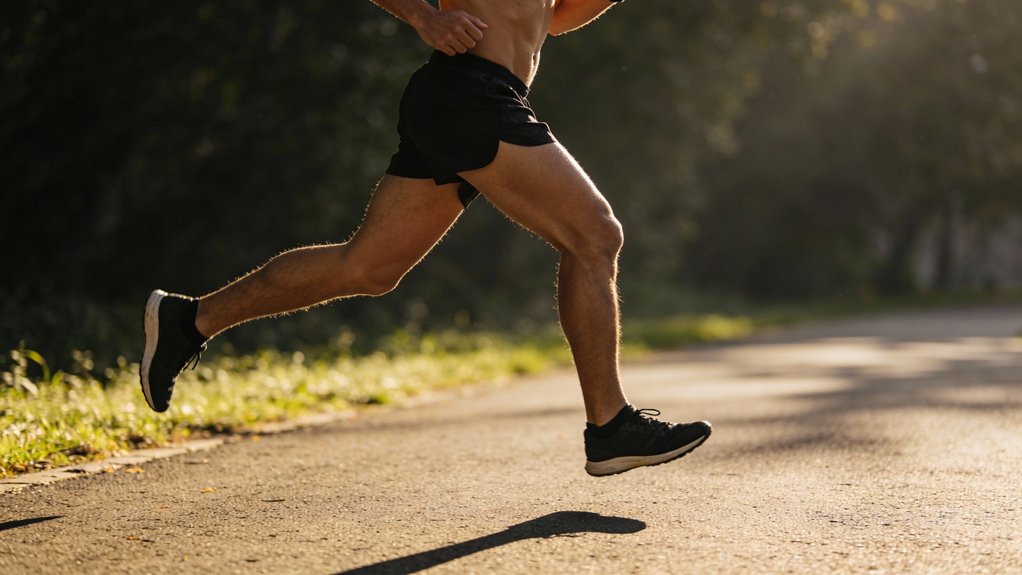
When you’re learning to run properly, your hips and core form the foundation that supports everything else.
Keep your hips level and aligned with your torso to prevent lateral movement that strains your knees.
Level hips and proper torso alignment are essential for preventing knee strain caused by unwanted lateral movement during your run.
Core engagement stabilizes your pelvis, promoting the upright posture you need for efficient running.
Lean slightly forward from your ankles, not your waist, to improve propulsion and energy transfer.
Make sure your feet don’t cross the center line as you run. This simple adjustment minimizes forces on your hips and knees.
Strong hip alignment and active core muscles protect you from injury while helping others on group runs.
Where Your Foot Should Land for Better Running Form
Your foot placement matters just as much as your hip alignment and core stability. Mastering foot placement techniques helps you run more efficiently while reducing injury risk.
Here’s what you need to focus on:
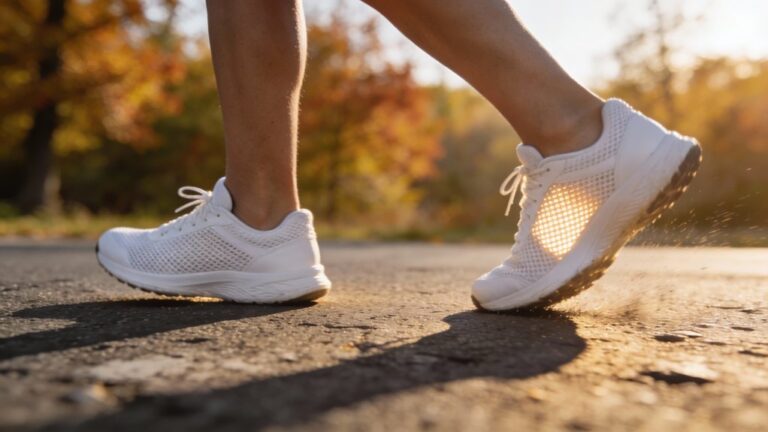
- Aim for a midfoot landing rather than striking with your heel, which reduces Achilles tendon stress and improves energy efficiency.
- Land beneath your hips to minimise lateral movement and protect your knees from unnecessary strain.
- Avoid overstriding by keeping your foot close to your center of mass, not far in front of your body.
Maintain a neutral ankle position throughout each stride for ideal results. Proper foot strike technique works together with your overall posture and breathing patterns to create a biomechanically efficient running stride.
The Right Way to Move Your Arms While Running
While proper footwork forms your foundation, arm movement directly affects your running efficiency and speed. Keep your elbows bent at 90 degrees throughout your stride.
Your hands should swing forward and backward, not side to side, reaching chest level without crossing your body’s midline. This prevents unnecessary lateral forces that waste energy and disrupt balance.
Keep your hands relaxed to avoid arm tension that leads to fatigue. Your arm swing should mirror your leg rhythm, creating a natural cadence that enhances form and reduces injury risk.
When you master this coordination, you’ll run faster with less effort.
How to Check Your Running Form While You Run
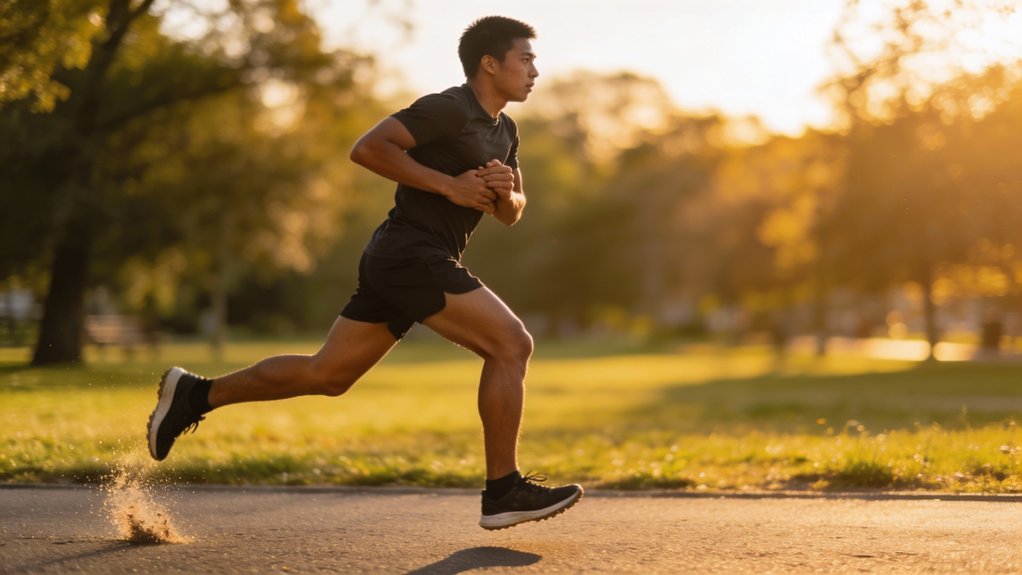
How can you spot problems with your form when you’re actually running? You’ll need to record yourself or find a reflective surface.
The mirror technique works well at gyms with wall-length mirrors, letting you observe your movement in real-time. However, video analysis gives you the most thorough view.
Here’s what to capture:
- Side angle footage to check your foot landing and excessive ankle flexion
- Front view to verify your arms stay within your body’s midline
- Back angle to spot hip weakness indicators
Record at least 30 seconds from each angle.
You’ll identify overstriding, lateral hip movement, and arm crossing patterns that affect your efficiency.
Running Form Mistakes That Cause Knee and Hip Pain
Once you’ve spotted form issues on video, the next step is understanding which mistakes actually cause pain.
Overstriding effects include excessive stress on your knees and hips when your foot lands too far forward.
Poor ankle flexibility disrupts alignment and strains your joints unnecessarily.
Watch for arms crossing your midline: this creates lateral forces that destabilize your hips.
Weak hip abductors let your feet cross the center line, multiplying stress on both knees and hips.
Regular video checks from different angles help you catch these problems early.